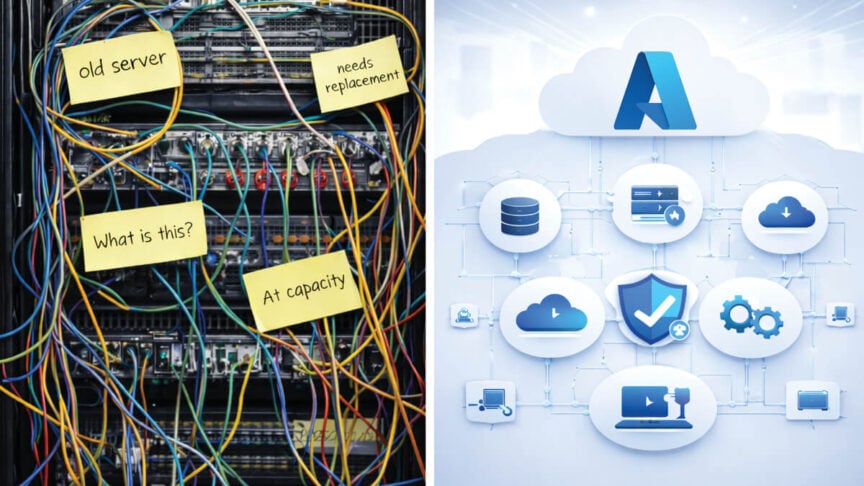
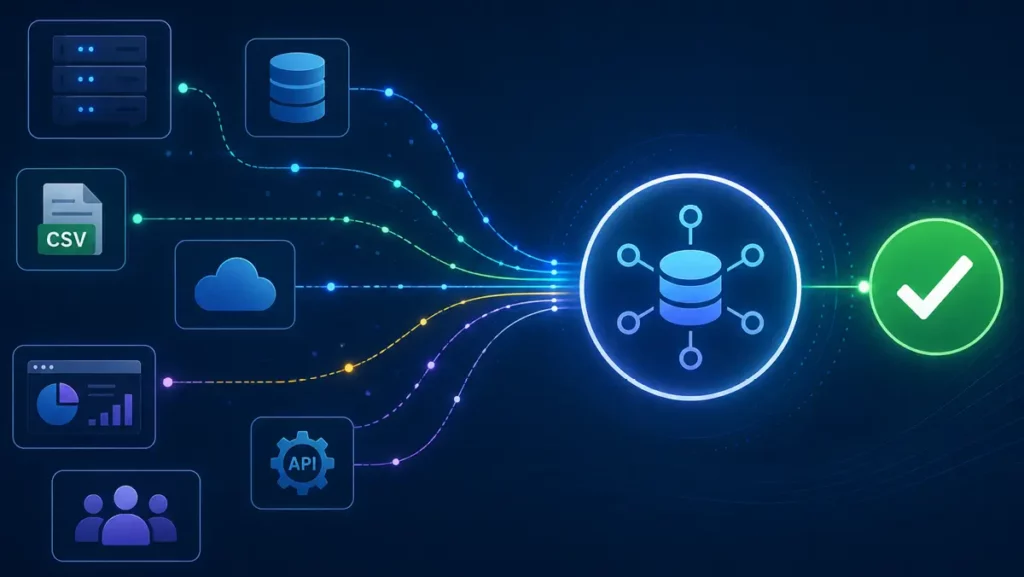
This isn’t an article about what Azure, Microsoft Fabric, or infrastructure platforms are capable of. It’s about what work looked like before these systems were in place, and what changed after.
Across JourneyTeam migration projects, the starting point is rarely a single issue. It’s usually a combination:
- A system is getting too expensive to maintain
- Infrastructure doesn’t scale with the business
- Reporting depends on manual effort
- Teams work across uncoordinated systems
- Pressure due to real business events like an acquisition or divestiture
These problems tend to show up together, because they’re all tied to cost, system limitations, and constraints that make the environment harder to run. The stories below focus on the positive impact customers identified once those problems were addressed.
When the Data Platform Stops Justifying Its Cost
Intermountain Express Transport | RS Hughes
Intermountain Express Transport was operating on a third-party reporting environment tied to their existing source systems, but the platform had become increasingly expensive, inflexible, and difficult to scale. The breaking point was the cost and effort required to keep the system running.
Moving to an Azure-based platform changed the structure:
- Multiple systems were brought into one operating environment.
- Reporting moved in-house instead of staying tied to vendor-controlled tools.
- The platform was rebuilt to support faster updates and future growth.
Impact: Reduced costs and improved speed and control
- Platform costs dropped by roughly 75 to 80% after migration.
- Information could be refreshed near real time, in some cases as often as every 15 minutes.
The difference wasn’t just better reporting. It was regaining control over cost, speed, and system flexibility so the environment could support operations instead of constraining them.
At RS Hughes, the problem wasn’t cost first – it was the limits of an aging reporting environment. The company was operating on legacy infrastructure supported by manual extracts, spreadsheet-based reconciliation, and processes that took substantial effort to maintain. The information existed, but getting to it consistently required too much manual work.
Migrating to Azure changed how the environment functioned inside the business:
- ERP, CRM, and operational systems were brought into a more connected environment.
- Reporting became more consistent and less dependent on manual intervention.
- Teams could access reliable information without rebuilding reports by hand.
Impact: Faster decisions faster and less manual reporting work
- Teams gained real-time visibility into inventory, sales, and profitability.
- The Excel-based reporting and reconciliation work that had been slowing the business down was removed from the process.
In both customer stories, the issue wasn’t whether information existed. It was whether the underlying environment could support the speed, scale, and demands of the business.
When Visibility Depends on Stitching Systems Together
Atlanta Community Food Bank
Atlanta Community Food Bank was operating across separate ERP, CRM, e-commerce, and volunteer systems, with no centralized structure connecting them.
The information existed but using it required staff to pull from multiple sources, align definitions, and validate outputs before anything could be trusted. As operations expanded, that model became harder to sustain.
Moving to Azure changed how those systems functioned together inside the organization:
- ERP, CRM, e-commerce, and volunteer systems were brought into a more connected structure.
- Reporting became more consistent and less dependent on manual rework.
- Teams could get usable information without stitching it together across systems.
Impact: Less manual coordination and better operational efficiency
- Teams gained faster access to the information they needed to run operations.
- Hours of manual report assembly were eliminated.
- The environment could support an operation delivering 112 million meals annually across 29 counties and more than 700 partners.
The migration removed a layer of manual coordination that had been slowing the organization down, so teams could spend less time assembling information and more time supporting operations.
When Infrastructure Can’t Support How the Business Works
Wiley|Wilson
At Wiley|Wilson, the issue was infrastructure. The company was operating an on-premises environment that had become harder to support as the business changed. Capacity was limited, hardware failures disrupted access, and the environment no longer worked reliably across locations or for remote employees.
The on-premises environment had clear limits:
- Only ~76 of 200 employees could reliably access the system.
- Hardware failures interrupted work and reduced reliability.
- Remote work exposed gaps the environment wasn’t built to handle across locations.
The system couldn’t support how the business now operated. Moving to Azure changed that.
Impact: Expanded access and reduced need for more infrastructure
- Operating costs were reduced by about 40%.
- Employees had a more consistent experience across offices and remote locations.
- The environment could support growth without requiring more on-premises hardware.
Wiley|Wilson wasn’t dealing with a broken system so much as an environment that had become too limiting. The migration removed those barriers so the business could operate more reliably and scale without adding more infrastructure.
When Migration Happens Under Real Business Pressure
Energy Provider
Not all migrations happen on a timeline the business gets to choose. For one energy provider, the migration was driven by a divestiture and had to happen under a hard business deadline.
Before the transition, the organization was operating on shared systems, users, applications, and infrastructure tied to the parent company. That meant the migration wasn’t just about moving technology, it was about separating the business without disrupting day-to-day operations.
The customer’s requirements were clear: a compressed 4-month timeline, transition nearly 1,000 users, and build an internal IT department at the same time. To complete the separation without disrupting business, JourneyTeam experts:
- Moved users, applications, and business-critical information to a new Azure environment.
- Kept systems and reporting available throughout the transition.
- Rebuilt security around a structured zero-trust model for the new organization.
The business was successfully separated into its own environment, operations continued without a break during the transition, and the new organization had a secure foundation to run independently.
The outcome wasn’t just technical success. It was executing a complex migration under real organizational pressure without breaking the business.
Where Legacy Environments Start to Break Down
Across these examples, the problem was that environments broke down in several ways all at once:
- Systems cost too much to maintain
- Infrastructure can’t scale
- Reporting requires manual reconstruction
- Teams operate across disconnected environments
- External events drive consolidations or divestitures
Once migrated, their environments became easier to run, scale, and rely on. The system matched how the business actually operated, infrastructure could expand without creating new bottlenecks, and reporting didn’t depend on manual coordination. The value didn’t come from the migration alone. It came from removing the friction that had been making the environment harder to operate, scale, and adapt.
What to Take Away
These examples come from different organizations, but the pattern is the same. Before migration, teams were spending time working around system limitations, manual processes, infrastructure challenges, or business deadlines. After migration, much of that effort was reduced or removed.
If these scenarios feel familiar, the real question is whether your current environment can still support how your business actually operates today. Chances are it can’t.
JourneyTeam’s migration engagements focus on determining:
- Where the current environment is creating operational drag.
- Which barriers are affecting cost, scale, access, or reliability.
- What needs to change so the business can operate with less friction.
Reach Out
We’ll help you identify what needs to change, what can stay, and where migration can create the most value.